Showing posts with label Second Doctor. Show all posts

Friday, January 8, 2010

The Power of the Daleks


A televised story featuring the Second Doctor, Ben, and Polly

Written by David Whitaker and directed by Christopher Barry

Polarity Rating: 4 out of 5

Hot on the heels of the Tenth Doctor's regeneration in "The End of Time," we come to probably the least-seen regeneration episode of all time, a foregone conclusion if there ever was one because the BBC elected to toss out all six episodes of the story long ago.

"The Power of the Daleks" was a huge crap shoot for the BBC. After three years in the role, William Hartnell's ailing health forced him to leave the show, and the producers found themselves with a conundrum: how could they possibly replace the lead actor after he had established himself and been received so well? From the outset, the producers and the BBC elected rather than casting someone else to step into Hartnell's shoes, they would completely revamp the character in looks and personality.

Perhaps to offset the audience's trepidation about the change in casting, the producers elected to bring back the Daleks, who hadn't made an appearance since "The Daleks' Master Plan." And so David Whitaker penned a Dalek story that left out any elements of the Doctor's personality and called it "The Destiny of Doctor Who." Dennis Spooner was later asked to make some changes after Patrick Troughton was cast in the role and the crew had some idea of what the new Doctor would be like. It was show creator Sydney Newman's idea to make the Second Doctor a kind of "cosmic hobo," who is better at listening than speaking, a stark change to the verbose Sherlock Holmes that David Whitaker originally had in mind.

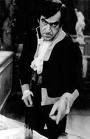
Nowadays we've seen the Second Doctor in stories like "The Mind Robber," "Tomb of the Cybermen," and "The War Games," but his characterization there is far from Sydney Newman's original idea. However, in this story, Newman's decsription of the character is spot-on: the Doctor spends little or no time stammering in protest or talking excitedly, and seems to ignore the questions of his companions (or does he?). Although it's difficult to gauge without seeing the visuals, he seems to be thinking more than doing, and he spends much of his time thinking while playing a recorder. There are little bits of playfulness that shine out in Troughton's performance, such as when he's listening to a piece of fruit or confusing china plates with the country of China (listen for a reference to a classic Hartnell story there).

Fans must have loved the Daleks after their initially appearance in 1963, but nowadays fans have a bit of a love-hate relationship with the Doctor's most famous enemy. One has to admit that they're a big stagnant visually, the sound of their voices tends to get a bit too repetitive half an hour into the story, and the writers have evolved them over the years into miniature war machines that can fly through the vacuum of space. On the other hand, the Daleks are an institution in England, and even casual viewers can recognize them. If the current producers failed to include a Dalek story in every season, I think they would have a minor coup on their hands.

With that in mind, I have to admit I approached this story as "just another Dalek story," and was looking forward to the opening regeneration scene rather than the remaining five and a half episodes. However, Whitaker really delivers a smashing good Dalek story, and we get to see them in a light we've never seen before; they're no longer the ravaging killers we saw in "The Dalek Invasion of Earth," but suspicious characters that lurk in the background for much of the story, causing both the listener and the Doctor much vexation.

The setting of the story is pretty standard fare. The Doctor, Ben, and Polly arrive on the planet Vulcan amidst yet another colony of earthlings. Among them is Dr. Lesterson, the archetypal scientist who is focused on nothing but his work, that being opening some kind of capsule discovered in the planet's mercury swamp. There are also rebels in the midst of the colonists who wide like to use Lesterson's work for their own purposes, particular when the capsule is opened and a Dalek emerges.

For once, however, the Dalek is not bent on blasting everyone in its wake. It seems willing to serve the colonists and eerily keeps repeating "I am your servant," in monotone Dalek fashion. The Doctor, of course, knows there's more to it than meets the eye, as do we. Even Ben and Polly seem to be taken in, no doubt because this is their first encounter with the Daleks. Of course, by the story's conclusion, the Daleks' true intention of using the colonists' power supply to build new Daleks becomes all too apparent and many, many people die.

There are moments in "The Power of the Daleks" that stand out in one's mind (spoilers ahead!). For instance, at the first episode's cliffhanger, the Doctor is assaulted by a Dalek creature which has crawled out of its casing. Viewers got to see only a glimpse of a Dalek claw in their premiere story, but seeing this for the first time must have been thrilling. Imagine it: not only is the Doctor being played by a new actor, but we get to finally see what a Dalek looks like under all that metal! In another scene, Lesterson accidentally uncovers the Daleks' plan when he's exploring the interior of the capsule. He sees a literal Dalek assembly line, with machines placing the tentacled creatures into their robot casings.

As a fan, listening to these scenes is enjoyable on two levels: it's a visual leap for the history of the show, but also the shock and joy of hearing the Daleks' plan unfold is far better than any of the Dalek revelations served up to us in the current story. Pure gold. We all know that something is going on in that capsule we just don't know what, and we're as anxious as the Doctor to discover it.

If one would have to say anything bad about this story, it would perhaps be the length. At six episodes, there is a little bit of padding in the middle, much of it involving the rebels plan to usurp the colony's governor. There are also maybe one too many classic scenes involving running up and down corridors. Ben and Polly also seem to take a backseat to the action, and they've conveniently captured and held hostage by the rebels, perhaps so the actors could take a break (Polly is absent from the fourth episode and Ben is absent from the fifth).

As with "The Enemy of the World," perhaps the story is better without the visuals; I can only imagine how boring the colony hallways must have looked. Nevertheless, any Doctor Who fan would admit that it would still be a real treat to actually see "The Power of the Daleks."

Fun Facts:
  • The BBC's account books, which still exist, say that this story cost a total of 17,065 pounds. What I find baffling is that the beeb actually threw out the films but elected to keep the books. There's bureaucracy for you.
  • Although the story is now available on CD and presented by Anneke Wills, it was originally released on cassette in 1993 and presented by Tom Baker.

Wednesday, September 16, 2009

The Enemy of the World

A televised adventure featuring the Second Doctor, Jamie, and Victoria

Written by David Whitaker and directed by Barry Letts


Polarity Rating: 4 out of 5

To the chagrin and frustration of Doctor Who fans everywhere, there lies a number of gaping holes in the canon, the most obvious being many of the episodes in the fourth and fifth series. At some point in the sixties or seventies, someone at the BBC (probably with a long-seated grudge against Patrick Troughton in particular) went on some kind of bender and elected to destroy a large handful of episodes from the First and Second Doctors' eras. Up until a few years ago, a few single episodes tended to pop up now and then, the most astonishing being the discovery of all four episodes of "Tomb of the Cyberman." "The Enemy of the World" contains six episodes, yet only one was recovered, and the story remains available solely on CD from the BBC (apart, of course, from telesnaps rendered by fans with an elementary understanding of editing with their VCR as well as a great deal of time to waste). Ironically, this very fact probably serves as something of a saving grace to the story.

"The Enemy of the World" uses one of those plot devices that always turns up in any adventure series: the evil-doer who just happens to be a dead ringer for the hero. Doctor Who used it previously in "The Reign of Terror," and it was used to a lesser extent in "The Chase" (ugh!) and "The Android Invasion." I've always thought this was silly and horribly contrived, but Patrick Troughton's performance here as the evil Mexican politician Salamander is top-notch and a joy to behold. The plot seems inspired by the James Bond movies that were rising in popularity in the sixties, with the Doctor and his companions landing sometime in humankind's future, where an ostensibly beneficial diplomat named Salamader is pulling the strings behind the scenes to secure his own rise to dictatorship. He delights in poisoning those who refuse to do his bidding, blames innocent lackies for circumstances beyond their control so he can replace them with evil stooges, and pretty much spends the first four episodes delighting in doing everything evil but twirling his moustache and tying Victoria to the tracks in the face of an oncoming train.

For much of the story, the Doctor plays second fiddle after Jamie and Victoria, who dive head-first as undercover employees in Salamander's operation; Jamie finds himself employed as a bodyguard while Victoria becomes an assistant to Chef Griffin (kudos to Reg Lye for a hilarious and memorable performance as Griffin). Just when all the cloak and dagger and double-dealings start getting tiresome (particulary when you know you have two more episodes to sit through), writer David Whitaker deals a surprise double-punch in the fifth and sixth episodes that made me almost clap my hands in delight like a giddy schoolgirl.

"The Enemy of the World" is the first "missing" televised story I've listened to in its entirety, so it was a treat to listen to a Second Doctor adventure after I thought I'd cashed my viewing list by seeing every available episode (I only learned recently that all the missing stories are available on CD). Six episodes can sometimes be quite a drudgery (hello, "The Time Monster"), but this story never loses its pacing.

As mentioned earlier, Patrick Troughton obviously has a blast playing the villain, and his usual portrayal of the Doctor seems to be overshadowed by Salamander, but one tends not to mind with the subplots involving Jamie and Victoria. In fact, the Doctor makes seems uncharacteristically hesitant to involve himself in the action in the first couple episodes, but this was probably so Troughton could showcase himself as Salamander first. Carmen Munroe as Fariah also gets an honorable mention and, as another reviewer mentioned, seeing a strong black woman in a position of power was something of a groundbreaker in 1967.

But there is a problem, and I feel almost guilty mentioning it. We can all hate the folks at the BBC for scrapping all those reels of film, but after listening to this story on audio and then reviewing the surviving third episode (available on the "Lost in Time" DVD boxed set), I was unbelievably disappointed by the shoddy production design, which looks like it was slapdashed together by the stage crew of a high school drama department. For instance, there's a slightly sad and disturbing scene in which one of Salamander's stormtroopers rampages a confused and scared citizen's home. The scene would have had more impact had the poor fellow had more in his home than, say, a cupboard of fragile dishes hanging right by the front door. And, of course, a lone portrait of Salamander on an otherwise blank wall which just begs the characters to comment on it.

I realize it's a bit uncharacteristic for fans to pick apart the production values of Doctor Who, but this story is a remarkable example of how the substance of the plot really rises over the wobbly sets, making it a testament to the quality of the show in its early years.

The CD release of "The Enemy of the World" is part of the BBC Radio Collection, and was presented with linking narration by Frazer Hines, who played Jamie. It doesn't sound like time has been kind to Mr. Hines, although that may just be the change in his accent, but he does a superb job, making both unobtrusive remarks about simple blocking points and passionate details about fistfights and action sequences.

Fun Facts: Patrick Troughton's son, David, played one of the guards in fifth and sixth episodes. Frazier Hines' cousin, Ian, also played a Central European guard in the second and third episodes. I was also a little surprised to learn that the readers of Doctor Who Magazine ranked this story 139 out of 200 in the October, 2009 poll. Would it have ranked higher if we were able to see all six episodes?